Many organizations still utilize Microsoft Dynamics NAV as a fundamental element of their business practices in 2026. Even though newer cloud-based technology systems, such as Microsoft Dynamics 365 Business Central, are becoming more widely used, many businesses that require dependability, flexibility/versatility, and long-term return on investment are still utilizing Dynamics NAV to power their operations.
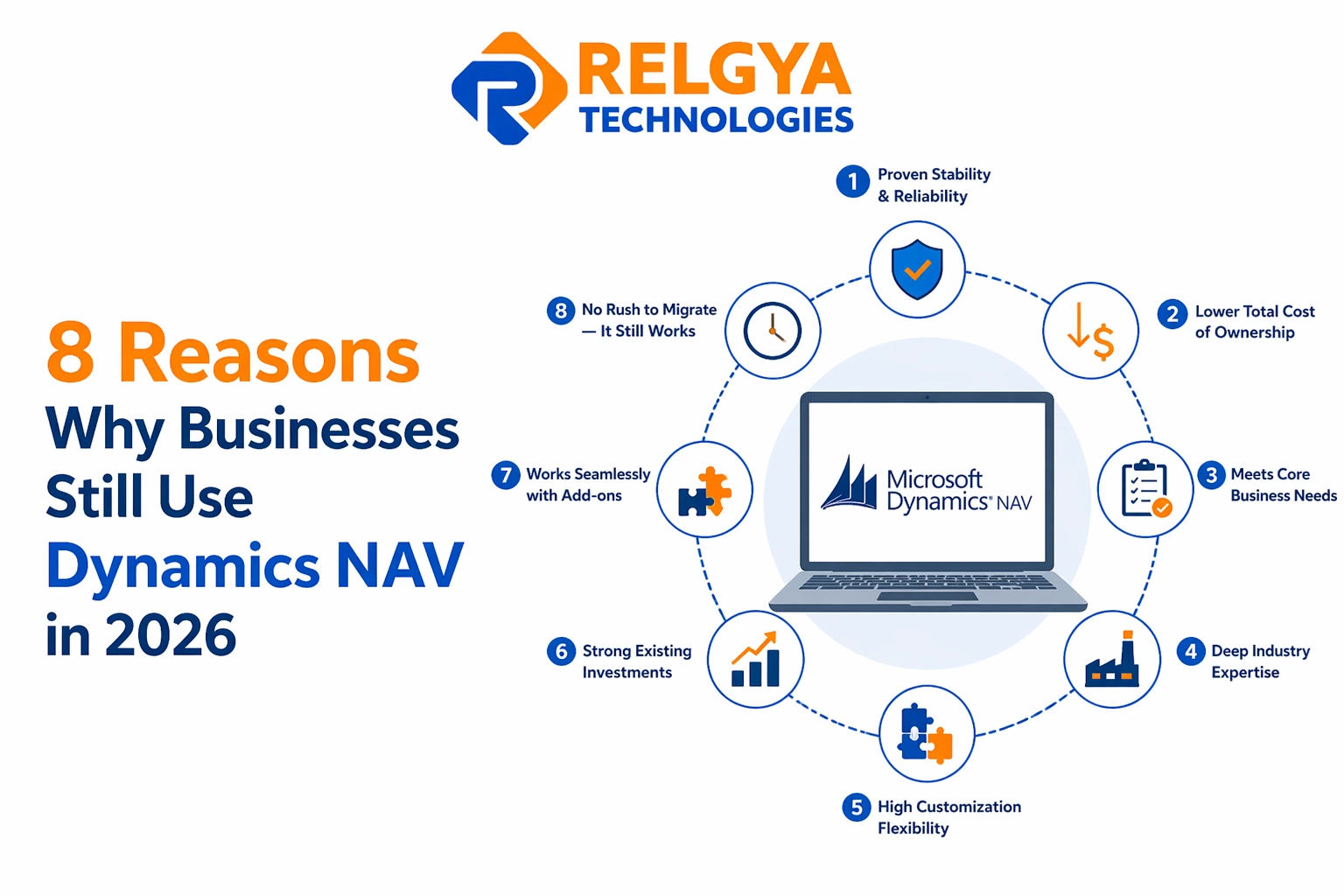
NAV is an essential part of the Microsoft Dynamics ERP ecosystem that will continue to provide a high level of service to thousands of firms throughout the world. The following are the most prominent reasons that companies continue to select Dynamics NAV in 2026.
1. Proven Stability and Reliability
Dynamics NAV is an established program that has stood the test of time. It has a long history of stable operation, which leads to trust from business users. Companies using Dynamics NAV like the fact that it was developed over many years and has a high degree of reliability. A stable culture provides fewer opportunities for businesses to experience unplanned downtime due to system disruptions. Therefore, NAV is the best choice for businesses that operate under conditions where prolonged downtime would be harmful.
2. Deep Customization Capabilities
Flexibility is one of Dynamics NAV’s biggest advantages. Most modern SaaS systems provide limited customizability; however, DYN-365 allows companies to customize the system based on their specific workflow processes. With the expertise of a professional software consulting organization, NAV provides the opportunity to customize modules, automate processes, and design an extremely tailored ERP solution.
3. Lower Long-Term Costs
The expense incurred for migrating to a new ERP is often overwhelming; hardware licensing, employee training, data migrations, and implementation expenses all culminate in large amounts very quickly. The overall cost of switching to a new ERP versus continuing to use Microsoft Dynamics NAV typically proves to be a better value when the existing system has been adequately optimized.
4. Strong On-Premise Control
Data control continues to be a significant concern across numerous sectors; this includes manufacturing, finance, and healthcare. Dynamics NAV provides companies with the ability to retain complete management of their data, security policies, and infrastructure through an on-premise system. Fully cloud-based systems cannot provide this degree of management.
5. Seamless Integration with Microsoft Ecosystem
Dynamics NAV can easily be integrated with Microsoft Excel, Microsoft Outlook and Microsoft Power BI; therefore, when using DNAV, teams are able to work in their respective environments with ease while still utilising the power of an ERP and sharing data across the Microsoft tool set.
If a business is working alongside a Microsoft Dynamics Partner, the integration of their Dynamics NAV with Office 365 or Azure can also be enhanced to provide greater integration and performance benefits.
6. Industry-Specific Functionality
The evolution of Dynamics NAV over time has added support for various industries, including manufacturing, retail and distribution. Many businesses have developed industry-specific custom solutions based on Dynamics NAV that have become an integral part of their day-to-day operations. An organization replacing this type of system would likely need to rebuild complex workflow processes from the ground up.
7. Gradual Upgrade Flexibility
Every business does not have to undergo a complete transformation into a digital one all at once. Dynamics NAV offers companies an opportunity to transition at their convenience. For example, if you wanted to add features, connect third-party systems, or plan for a complete move to the cloud in the future, NAV will allow you to phase in your changes instead of trying to do everything at once.
8. Trusted Support Ecosystem
A large range of consultants and manufacturers exist for Dynamics NAV – therefore, finding a reliable consultant for your business operation, whether you need maintenance, optimisation or enhancement of an existing Dynamics NAV application, will be easy for all businesses. The extensive network provides security for the longevity of an application.
Conclusion
With new ERP solutions being developed all the time, Dynamics NAV is still considered to be a viable option for many companies in 2026 because of its strength, ability to adapt, and low cost for businesses with significant prior investments in both customizations and infrastructure; therefore, instead of rushing into transitioning to the software platform, many organizations are maximizing their current system’s value before strategically planning for their next system.
FAQs
Is Dynamics NAV still supported in 2026?
While mainstream support has shifted toward Business Central, many businesses still use NAV with extended support and partner-led maintenance.
Should businesses upgrade from Dynamics NAV?
It depends on business needs. Companies looking for cloud scalability may consider upgrading, while others may continue using NAV for its reliability and customization.
Can Dynamics NAV integrate with modern tools?
Yes, with the help of a skilled Microsoft Dynamics partner, NAV can integrate with modern tools like Power BI and third-party applications.